
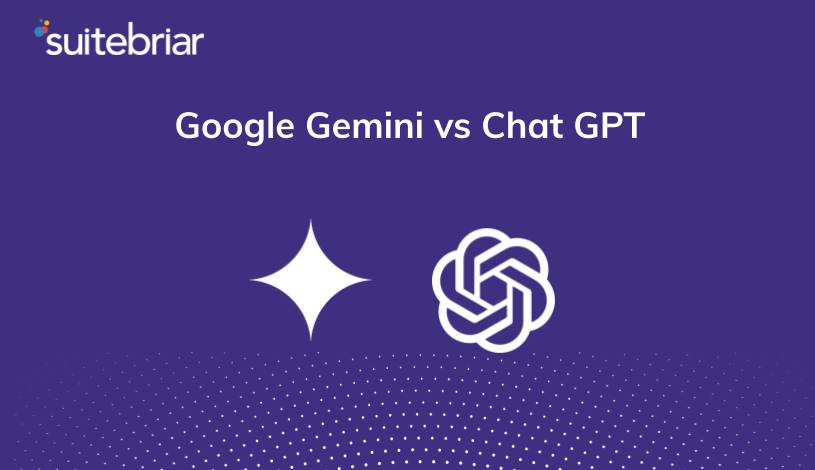
Gemini and Chat GPT are transformer-based models with similar parameters, making the two comparable.
- Real-time Information
Gemini is trained on live data sources. This includes news, sports scores, weather, and more. Chat GPT has been trained on fixed data sources that don't update in real-time.
Three major sources of Gemini’s real-time information:
-
- News: Gemini has access to real-time news from reliable sources, allowing it to process breaking news and events and include them in its responses.
- Research: Gemini is seamlessly integrated with databases of scientific publications granting it the capability to analyze and grasp novel research swiftly.
- Web-Crawling: Gemini is like a spider. It crawls through a few seed URLs and follows the hyperlinks on each page to discover new URLs. This information is retrieved recursively. This stored information as content, structure, or metadata can be used for searching, analyzing, or indexing. This helps understand trends online, structure various languages in the real world, and discover new information in real time.
- Seamless Integration with Google Suite
Google’s search engine infrastructure allows superior search and retrieval capabilities. This allows a more unified experience with integration with Google tools such as Google Docs, Google Sheets, Google Slide, etc. The direct access to Google’s proprietary data and APIs enables Gemini to use Google Maps, Google Search, etc. - Voice and multimodal capabilities
Google allows the integration of text, images, audio, and video within search results. Google Lens allows users to prompt questions with pictures and videos taken in real time and to ask questions on them. Gemini’s ability to process and integrate various data could be supported by cross-modal learning techniques, where insights gained from one type of data (e.g., text) enhance understanding and processing of another type (e.g., images).
- User experience and Customization
Multimodal Capabilities allow users to interact more naturally with the system accommodating different needs of all kinds of users. This provides accessibility and inclusivity to all users. This also allows enhanced experience within the Google ecosystem with specialized features leveraging Google’s technology. This also includes tailoring responses to individual users based on their past interactions, interests, and preferred communication styles. For example, Gemini could learn to provide more concise or detailed responses depending on the user's preference. It could also prioritize information most relevant to the user's current task or goals. Additionally, Gemini could adapt language and tone to match the user's, creating a more engaging and personalized conversational experience.

- Optimized with a TPU pod
Google’s in-house R&D DeepMind researches Gemini. Unlike other competitors, R&D is outsourced to a third party, which brings additional risks and security concerns. Gemini is built from the start on a TPU pod. Therefore, a bonus of better cost, better results, better inference, and infrastructure that matches the model that goes to deployment.

We at Suitebriar help you choose what is best for you. So are you ready to leverage AI for your business needs?